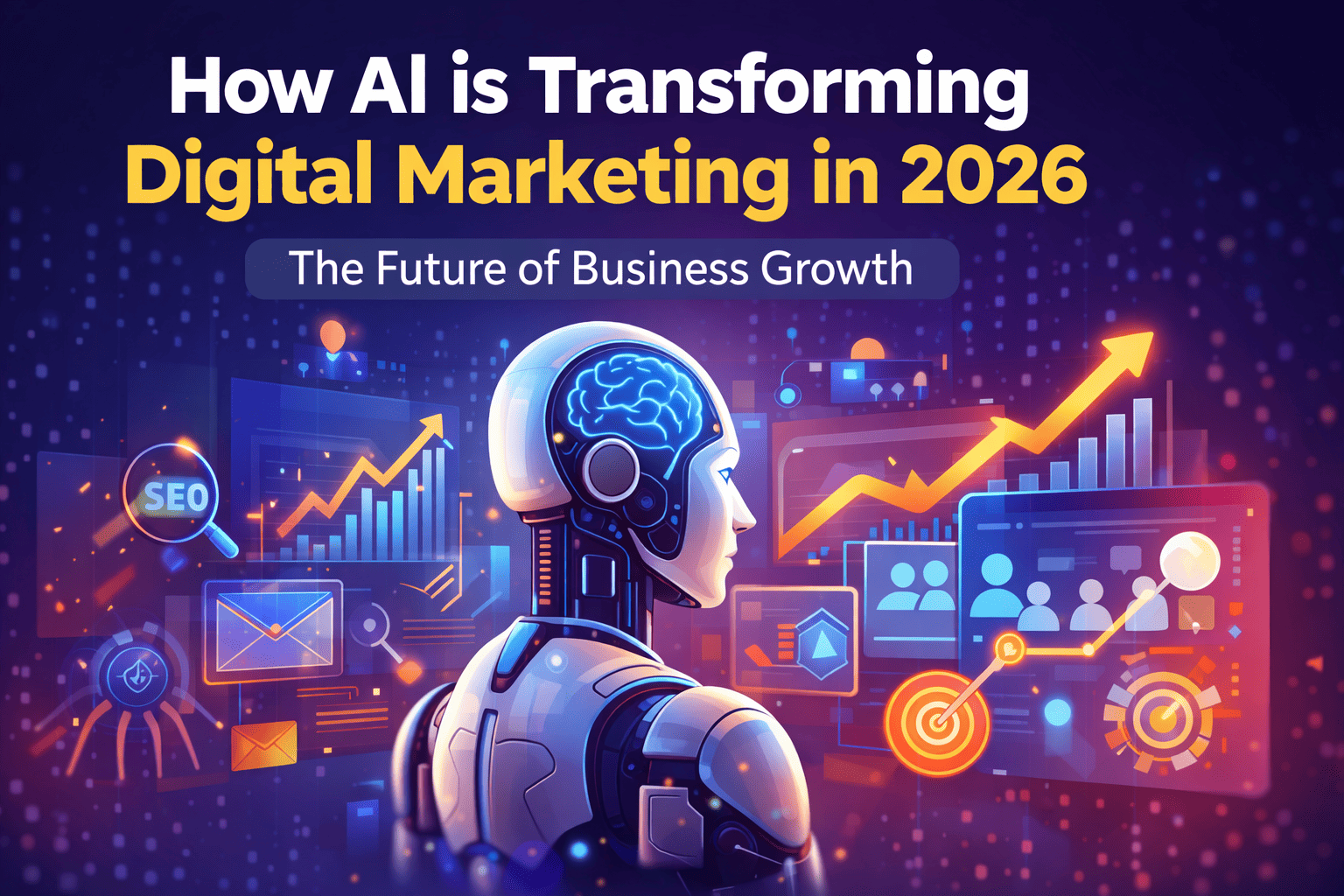
How AI is Transforming Digital Marketing in 2026
Artificial Intelligence is no longer a future concept — it is the driving force behind modern digital marketing strategies in 2026. From personalized customer experiences to automated campaign optimization, AI is reshaping how businesses attract, engage, and convert their audiences.
For companies in competitive markets like Dubai, adopting AI-driven marketing is no longer optional — it’s a strategic advantage.
1. Hyper-Personalization at Scale
In 2026, customers expect personalized experiences across every touchpoint. AI analyzes user behavior, search patterns, demographics, and engagement history to deliver highly targeted content, ads, and offers.
Instead of generic campaigns, businesses can now:
Show dynamic website content based on user intent
Deliver personalized email sequences
Run highly segmented paid advertising campaigns
Recommend products using predictive algorithms
This level of personalization significantly improves engagement and conversion rates.
2. AI-Powered SEO & Search Evolution
Search engines are smarter than ever. With AI-driven search algorithms and generative search experiences, ranking on Google now requires more than keyword stuffing.
AI helps marketers by:
Identifying high-intent keywords
Predicting search trends
Generating optimized content outlines
Analyzing competitor strategies
Improving technical SEO performance
In 2026, SEO is less about manipulation and more about intelligent content strategy supported by AI insights.
3. Smarter Paid Advertising Campaigns
AI has transformed performance marketing. Platforms like Google Ads and Meta Ads now rely heavily on machine learning to optimize campaigns automatically.
AI improves paid ads by:
Automatically adjusting bids in real time
Identifying high-converting audience segments
Testing multiple creatives simultaneously
Predicting customer lifetime value
Reducing cost per acquisition
This allows businesses to maximize ROI while minimizing manual effort.
4. Predictive Analytics for Better Decision-Making
One of AI’s biggest contributions is predictive analytics.
Instead of reacting to past data, businesses can now forecast:
Future sales trends
Customer behavior patterns
Campaign performance outcomes
Churn probability
Demand fluctuations
This empowers marketers to make proactive, data-backed decisions rather than relying on assumptions.
5. AI Chatbots & Conversational Marketing
In 2026, customer support and lead generation have become automated through AI-powered chatbots and conversational tools.
Advanced AI chatbots can:
Handle complex customer queries
Qualify leads automatically
Book appointments
Provide 24/7 support
Guide users through the sales funnel
This enhances customer experience while reducing operational costs.
6. Content Creation & Creative Optimization
AI tools now assist in content generation, video editing, ad copywriting, and even graphic design.
However, the winning strategy in 2026 is not AI alone — it’s AI + Human Creativity.
Businesses that combine AI efficiency with strategic human insight produce the most impactful campaigns.
7. Automation of Marketing Workflows
Marketing automation powered by AI helps streamline:
Email sequences
Lead nurturing funnels
Social media scheduling
CRM updates
Reporting dashboards
This allows marketing teams to focus more on strategy and innovation rather than repetitive tasks.
The Future of AI in Digital Marketing
AI is not replacing marketers — it is enhancing their capabilities.
Businesses that embrace AI-driven strategies gain:
Better efficiency
Higher conversion rates
Improved customer experiences
Smarter budget allocation
Stronger competitive positioning
In a fast-moving digital economy like the UAE, companies that leverage AI today will lead the market tomorrow.
Final Thoughts
AI is transforming digital marketing in 2026 by making it smarter, faster, and more precise. The brands that adapt to AI-powered tools and data-driven strategies will dominate the digital landscape.
The question is no longer whether to use AI — but how effectively you can integrate it into your marketing strategy.